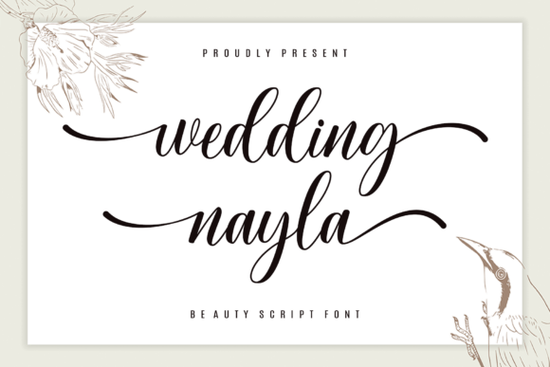
If you're looking for a script font that feels both romantic and refined especially for wedding stationery, invitations, or keepsake prints the Wedding Nayla Font is a thoughtful choice. It’s not overly ornate, but it carries quiet confidence: smooth letterforms, subtle contrast in stroke weight, and gentle flourishes that feel intentional, not distracting. Whether you're designing save-the-dates for a client or hand-lettering a vow book for a friend, this font supports the emotion of the moment without shouting over it.
When does Wedding Nayla work best?
This font shines in contexts where elegance matters more than flashiness. Think: foil-stamped invitation suites, minimalist bridal shower menus, engraved wooden place cards, or digital wedding websites with soft, warm palettes. It pairs well with clean sans-serifs (like Montserrat or Lato) for body text, letting the script take center stage in headings and accents.
It’s also a practical pick for print-on-demand sellers who offer customizable wedding products think mugs, canvas prints, or framed quotes. Because the letters flow naturally and maintain legibility at medium sizes (16–24 pt), it scales well across formats without needing heavy manual kerning or spacing adjustments.
How does it compare to other popular script fonts?
Unlike bolder, high-contrast scripts like Abigail Font, Wedding Nayla leans into subtlety its curves are softer, its terminals less dramatic. That makes it especially useful when you want warmth without whimsy. If you’ve used Preppy Berry Font for cheerful baby showers or birthday invites, you’ll notice Wedding Nayla sits at the opposite end of the tone spectrum: quieter, more mature, and intentionally unhurried.
For designers who love calligraphic texture but need something more consistent than hand-drawn options, Andalusia Calligraphy Font offers richer swashes and alternate characters but Wedding Nayla gives you polish without complexity. You won’t spend hours swapping ligatures or troubleshooting OpenType features. It works straight out of the box in Canva, Adobe Illustrator, and even Cricut Design Space.
What kind of projects do crafters actually use it for?
We’ve seen real users apply Wedding Nayla in ways that go beyond standard invites:
- Customized napkin prints for seated dinners (using light gray ink on ivory linen)
- Embroidery digitizing its clean outlines translate well to stitch files
- Chalkboard-style signage (digitally designed, then printed on matte vinyl)
- Small-batch greeting cards sold at local boutiques or Etsy shops
- Monogrammed tote bags or ceramic mugs for bridal parties
One small business owner told us she uses it for “thank you” tags tucked inside wedding favor boxes paired with a simple serif for the couple’s names and date. It’s personal, but never cutesy.
Is it beginner-friendly?
Yes if you’re comfortable installing fonts and typing in design software, you’re set. There are no alternate glyphs or stylistic sets to manage, which lowers the learning curve compared to some premium script fonts. That said, it’s still worth testing spacing in your layout: script fonts can look cramped if tracking is too tight. A quick tip: start with 50–80 units of letter-spacing for headlines, and adjust by eye.
If you're just starting out with typography, consider pairing Wedding Nayla with something like Sundary Beach Duo Font for contrast it includes both a delicate script and a matching clean sans, so you get harmony without hunting for compatible pairings.
What about licensing and usage rights?
The Creative Fabrica license covers commercial use, including physical products you sell (like printed stationery or embroidered linens) and digital items (such as Canva templates or SVG bundles). You don’t need an extended license for small-batch POD sales but always double-check the specific license terms on the product page before launching a large run.
It’s also worth noting that Wedding Nayla doesn’t include multilingual support beyond basic Latin characters (no Cyrillic, Greek, or extended diacritics). So if you’re designing for bilingual weddings, you may need to layer in a secondary typeface for non-English text.
Before you download or purchase:
- Test it with your actual copy not just “The quick brown fox…” to see how letter combinations like “Th,” “ff,” or “st” sit together
- Try it in your preferred software first (some free trials let you preview fonts before installing)
- Compare it side-by-side with Childrens Scribbles Font if you’re weighing tone: one feels like a handwritten love note, the other like a child’s joyful drawing both have their place, but they serve very different moments
- Save a version of your file with outlined text before sending to print, especially for foil or embossing jobs
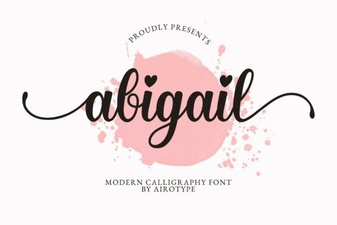 The Abigail Font: Elegant Typography for Modern Design
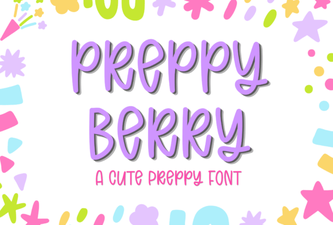 Preppy Berry Font for Web Projects & Design
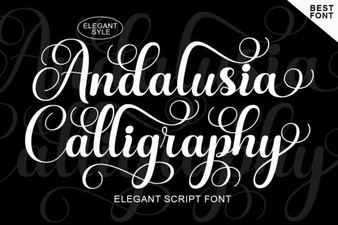 Craft Projects with Andalusia Calligraphy Fonts
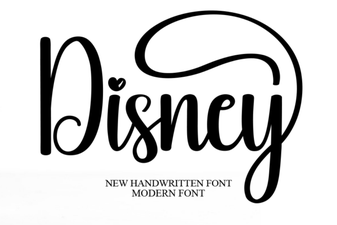 Discover the Magic of Disney Font Design
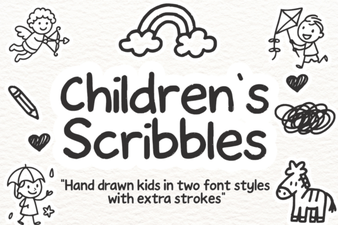 A Font for Kids' Creative Projects & Designs
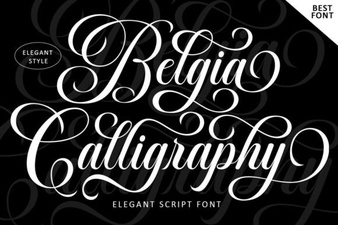 Belgian Calligraphy Font Designs & Inspiration